
A complete guide to choosing and installing high-lumen LED lighting
Key Takeaways
Choosing the right equipment for professional lighting projects requires balancing performance, energy efficiency, and safety. This article outlines the technical foundations necessary for successful high-performance lighting deployments.
High-intensity lighting must be evaluated by lumen output rather than just wattage consumption.
Proper application design for industrial or outdoor spaces relies on specific beam angles and mounting heights.
Energy rebates and long-term durability are best secured by selecting DLC Premium listed fixtures.
Thermal management systems are critical for extending the lifespan of high-output LED components.
Routine maintenance and smart sensor integration significantly reduce long-term operational costs.
Understanding high-lumen LED technology
Defining the lumen output for high-intensity lighting
Lumen output represents the total quantity of visible light emitted by a source. When discussing high-lumen LED systems, we focus on the raw intensity required to illuminate vast commercial or industrial floor areas efficiently. Unlike older technologies that relied on high wattage to produce a bright glare, modern LEDs prioritize the conversion of electricity into useful light.
Distinguishing between wattage consumption and lumen output
Many professionals conflate power usage with brightness, but they are distinct metrics. A system’s energy cost is determined by its wattage, while its illumination capacity is defined by lumens. We prioritize high-efficacy designs that deliver maximum illumination with minimal electrical input, moving away from outdated HID metrics where power and heat were primary indicators of output.
The role of luminous efficacy in modern LED design
Luminous efficacy measures how efficiently a light source produces visible light, typically expressed in lumens per watt (lm/W). High-performance fixtures, such as those recommended by Led Lumenaires, often feature advanced chip technology that yields higher efficacy than standard commercial units. This optimization is the core driver of energy-conscious design, allowing project managers to illuminate expansive spaces while drastically slashing monthly energy expenditures.
Identifying ideal applications for high-lumen LED solutions
High-bay configurations for industrial warehouses
Warehouses require consistent illumination from significant mounting heights, often exceeding 20 feet. By utilizing focused high-output luminaires, facilities can achieve uniform light distribution across racking aisles and packing stations. Ensuring the correct mounting height prevents dark spots and optimizes the usable light level on the ground plane, which is essential for safe forklift operations.
Enhancing security in commercial parking lots
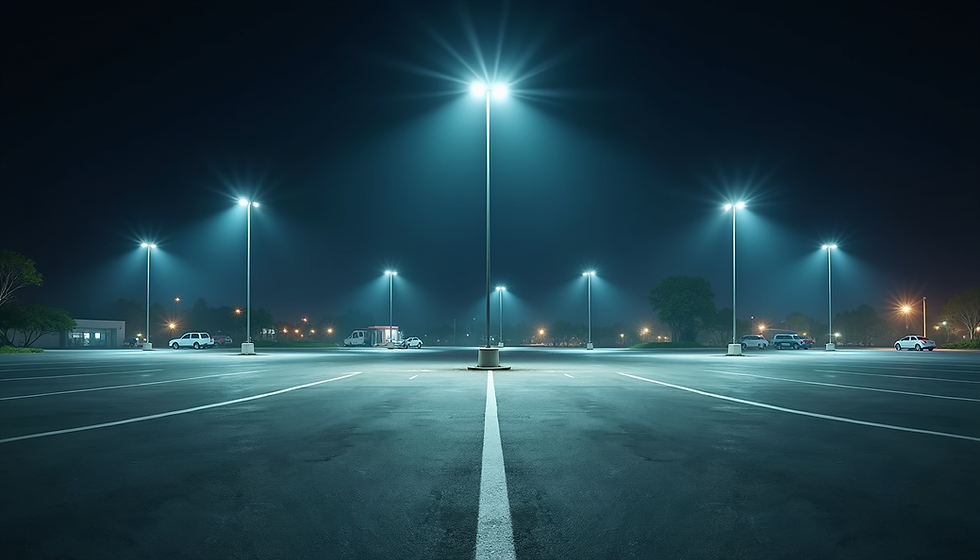
Outdoor security relies on maximizing coverage without creating excessive light pollution. High-lumen fixtures used in these environments must account for both distance and safety-focused criteria, such as area lighting reach and uniform brightness. By placing fixtures strategically throughout the lot, businesses protect their assets and ensure a welcoming experience for visitors after dark.
Achieving high-visibility in retail and commercial environments
Retail visibility demands precision similar to how one might consider wine pairing for a dining experience, where balance is key. High-intensity lighting in showrooms or large lobbies must provide color consistency and glare reduction to maintain comfort. When managed correctly, this light enhances product appearance and fosters a productive workspace for guests and employees alike.
Key specifications to evaluate before purchasing
Selecting the appropriate Correlated Color Temperature (CCT)
CCT refers to the warmth or coolness of the light emitted, usually ranging from 3000K to 6500K. For industrial tasks, a cooler 5000K provides high visual clarity and energy, while commercial spaces might favor a slightly warmer temperature for comfort. As with finding the perfect table lamps for a room, matching light to the environment is essential for overall satisfaction.
Understanding the importance of Color Rendering Index (CRI)
CRI measures how accurately a light source reveals colors compared to a natural light source. While many industrial applications require only a standard CRI, spaces where color accuracy is critical—such as retail displays or quality control sections—benefit from higher ratings. Using commercial LED lighting with optimized CRI improves visual comfort, similar to how smart TV setup settings enhance the clarity of visual media.
Prioritizing DLC listing and national energy certifications
DLC Premium certification is a hallmark of quality, ensuring fixtures meet strict performance standards for energy efficiency and lifespan. Utilizing verified components helps fulfill requirements for utility rebates, making it a critical aspect of commercial projects procurement. We categorize these metrics in the comparison below:
Specification | Standard Grade | Professional Grade |
|---|---|---|
Efficacy | 100-120 lm/W | 160-200+ lm/W |
Certification | UL Basic | DLC Premium |
Lifespan (L70) | 30,000 hrs | 100,000+ hrs |
Selecting gear that meets high-end specifications ultimately ensures that a project qualifies for maximum utility incentives while minimizing long-term failure rates.
Essential components for a reliable high-lumen LED installation
Importance of advanced heat dissipation and thermal management
Heat is the primary enemy of LED semiconductors. Professional-grade fixtures utilize die-cast aluminum housing to move heat away from sensitive internal components. By maintaining cooler internal temperatures, Led Lumenaires ensures that the hardware remains operational well beyond the standard warranty period, avoiding costly mid-cycle replacements.
Evaluating driver requirements for commercial-grade fixtures
Drivers convert incoming AC electricity into the specific DC levels required by LEDs. Industrial-grade drivers, as seen in advanced 200W LED high bay lights, include robust surge protection that shields the system from electrical spikes. This protection is as fundamental as selecting natural personal lubricants for sensitive wellness needs, where prioritizing chemical and safety integrity is non-negotiable for lasting performance.
Integrating smart motion sensors and dimming capabilities
Modern systems often incorporate occupancy-sensing technology to automate lights in idle zones. By allowing light output to scale with actual facility usage, businesses capture additional savings that are not possible with traditional "always-on" lighting. Integrating these controls into the main design ensures that no megawatt of power is wasted on empty hallways or storage aisles.
Best practices for installing high-lumen LED systems
Calculating optimal mounting heights and beam angles
Installation success hinges on projecting light precisely where it is required. Proper beam angles ensure that high-intensity output does not create light scatter or dark spots, which are common in poorly designed outdoor LED area lighting. We ensure that every fixture placement maximizes throw and uniformity by strictly following standard architectural guidelines.
Managing high-voltage wiring and electrical safety
Installing high-output lighting often involves working with complex electrical infrastructures. Every installation must follow local code requirements, particularly regarding circuit loads and ground fault protection. If you ever need to troubleshoot a system, consider the following routine:
Inspect all secondary connections for tension and seal integrity.
Verify the input voltage matches fixture specifications.
Test the occupancy sensor range to confirm it triggers correctly.
Clean the external lens surface to remove accumulation and restore full output.
Update the electrical maintenance log for compliance records.
Developing a long-term maintenance schedule for maximum lifespan
Even the most reliable systems require periodic review to remain at peak efficiency. Professionals should view their lighting not as a one-time purchase, but as an asset that benefits from scheduled cleaning and performance auditing. Partnering with a supplier that provides consistent pro support ensures that your facility maintenance crew is always equipped with the necessary components to maintain an efficient infrastructure.
Conclusion
Transitioning to professional-grade LED infrastructure is a strategic move that enhances workplace safety while dramatically reducing overhead costs. By focusing on metrics like luminous efficacy, DLC listings, and intelligent controls, your facility achieves a high level of operational excellence and lasting reliability for years to come.
Frequently Asked Questions
What is the most common reason for LED light failure?
Most failures in high-output LED systems result from poor thermal management or power fluctuations affecting the driver, rather than the diodes themselves.
Do higher lumens always mean the light is better for a workspace?
Not necessarily, as excessive lumens can cause glare which degrades visual comfort and safety in tasks requiring close attention.
Can I mix and match different color temperatures in the same room?
It is generally recommended to stick with one color temperature for a uniform appearance, as mixing temperatures can create noticeable shadows and aesthetic visual confusion.
How does fixture mounting height impact the choice of beam angle?
Higher mounting points usually require tighter beam angles to force the light down to the floor, whereas lower ceilings require wider angles to achieve proper light overlap.
Why should I prioritize DLC listed products for my commercial project?
DLC listing serves as a verified indicator that the product meets performance benchmarks, which is often required to qualify for utility company rebates.
Are smart lighting controls worth the additional upfront cost?
Yes, smart sensors typically pay for themselves within two to three years through energy savings and the significant extension of the fixture's overall lifespan.
Is it dangerous to install industrial lighting myself without a certified professional?
Working with high-voltage industrial circuits poses signficant safety risks, and professional installation remains highly recommended to ensure regulatory compliance and occupant safety.
Comments